Stock & water requirements
List fish, crustaceans or shellfish by species, intended quantity/load and holding duration. Identify freshwater or seawater needs for review.
COMMERCIAL SEAFOOD EQUIPMENT
Specify a commercial lobster tank or multi-compartment live seafood display around your species, holding plan and available utilities.
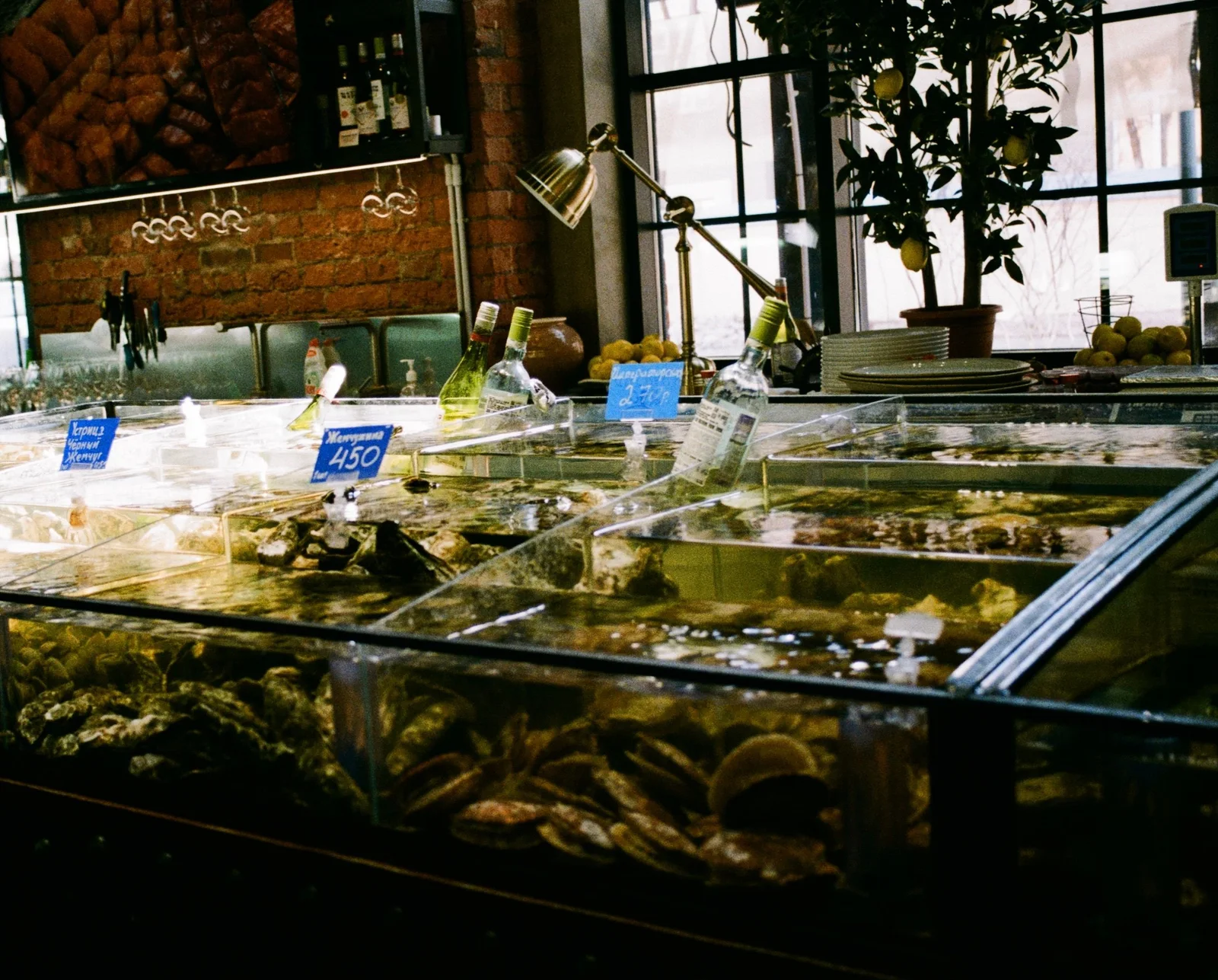
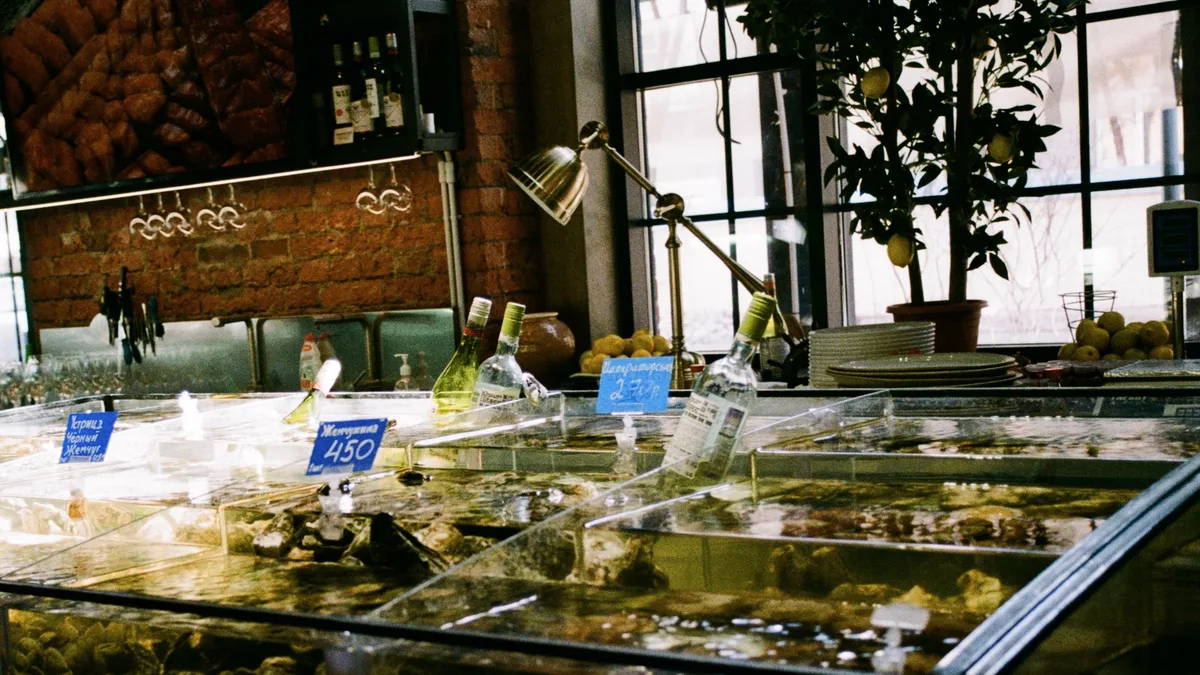
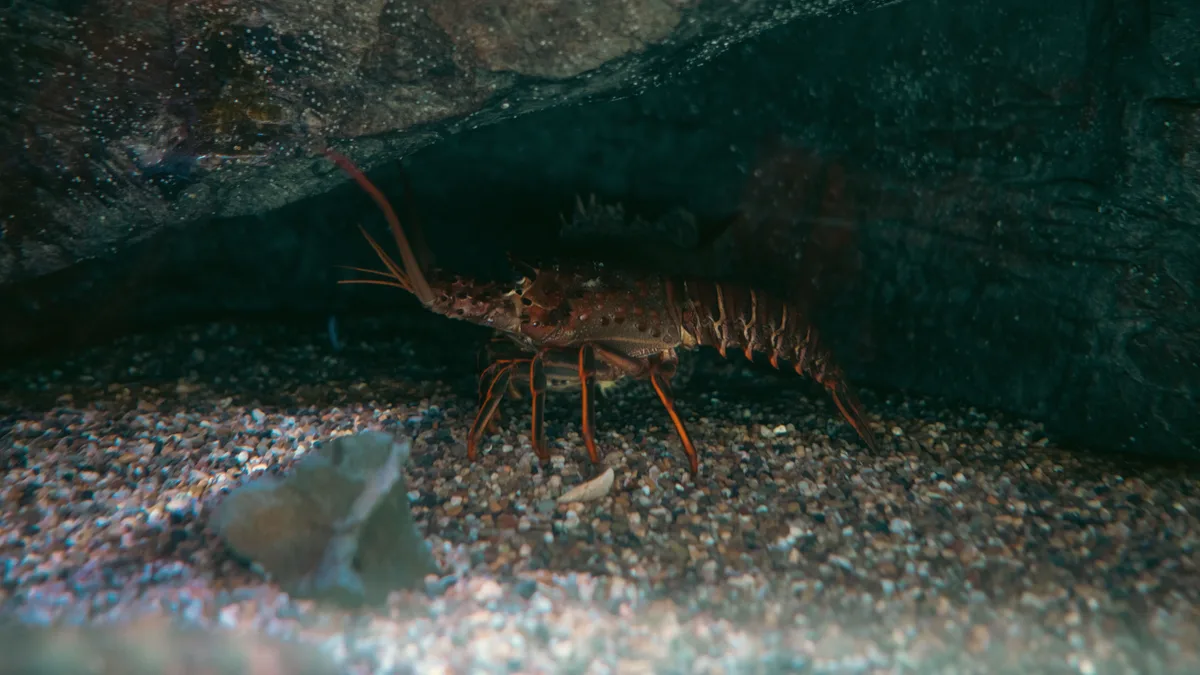
YOUR APPLICATION / YOUR EQUIPMENT SCOPE
Planning live seafood display for a restaurant, seafood market or supermarket? Share the intended species and holding task, then review the footprint, viewing faces and service area. The tank arrangement and proposed water systems need to be considered together.
List fish, crustaceans or shellfish by species, intended quantity/load and holding duration. Identify freshwater or seawater needs for review.
Show which groups need separate water conditions. More compartments or tiers do not automatically mean independent water circuits.
Request the proposed circulation, filtration, oxygenation and temperature-control scope, together with maintenance and commissioning responsibilities.
A rough sketch, approximate dimensions, site photo or reference link is enough to start a discussion. Share what you know and leave the remaining details open for review.
Open each product for its own images and technical information. Use the reference to explain the arrangement you want; the final custom scope follows the reviewed equipment schedule.
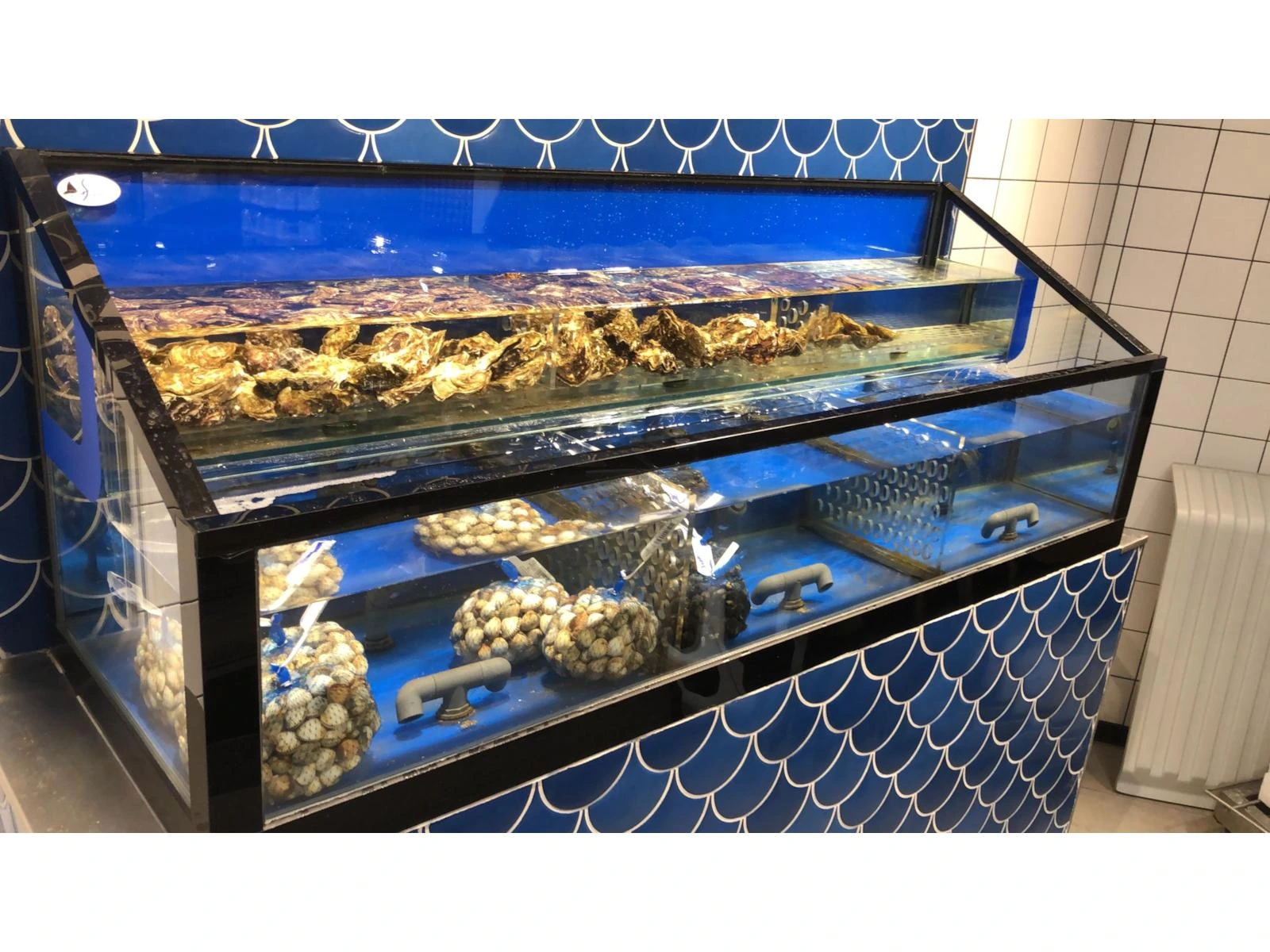
Compare the two-level arrangement and its listed circulation/filtration reference; request the actual circuit boundaries.
View this configuration ↗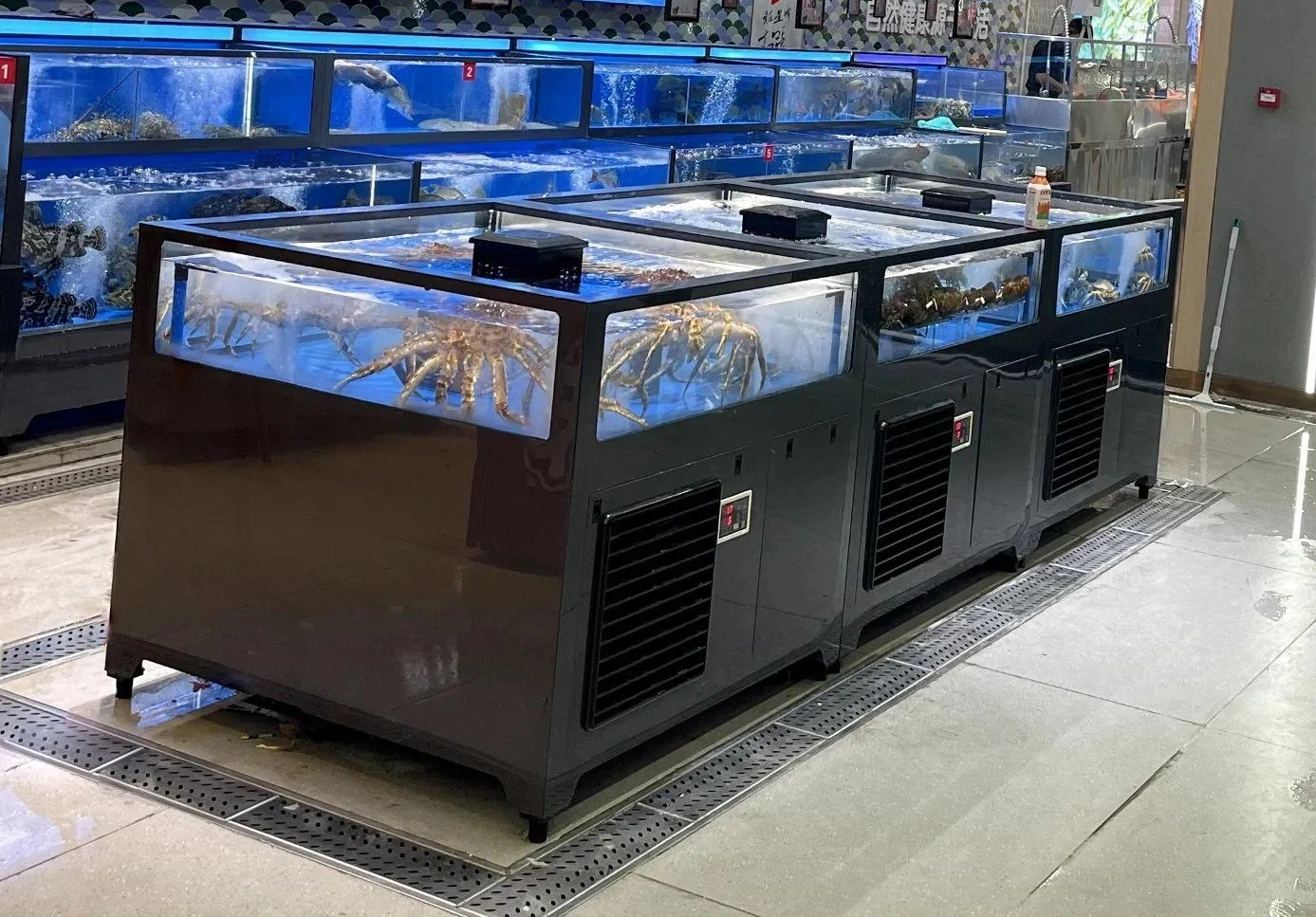
Compare the lobster holding reference and its own system information against the intended stock.
View this configuration ↗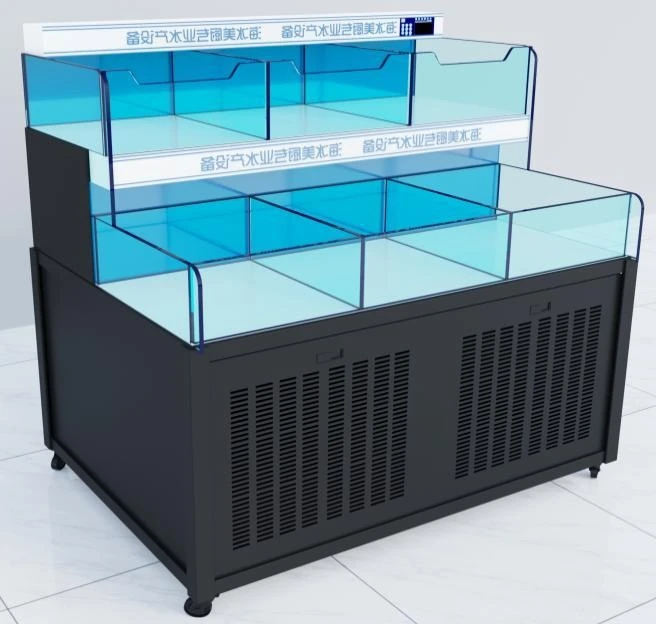
Compare the shrimp/crab display arrangement, working access and the proposed holding-system scope.
View this configuration ↗External length, depth and height are not usable water volume or a stocking limit. Ask for usable volume and a reviewed holding load for the actual species, system and operation.
Ask who provides site connections, commissioning, operating guidance and maintenance information. Have the proposal identify the supplied water circuits, pumps, treatment and temperature-control components so the system boundary is clear.
A restaurant seafood tank may combine customer-facing presentation with live holding. A market or retail installation may prioritize visibility, staff access and several display compartments. Describe the intended species and the way the system will be operated; suitability requires a separate review from fresh seafood display equipment.
Discuss the tank footprint, viewing faces, compartments and service area. A single display unit and a group of connected units have different installation questions. Confirm which pumps, filters, temperature-control components and connections are included in the proposal rather than assuming a standard package.
A multi-tier layout may be considered where presentation and floor space need to be balanced. Review access to each tier, the utility route, the supporting arrangement and cleaning access. The number of tiers alone does not establish suitable capacity or an operating limit.
The proposed water-system layout should explain circulation routes, component access and the connections between compartments. Ask which components are supplied and how the installation will be commissioned. This page does not prescribe flow rates or water-condition settings.
Ask for the proposed filtration arrangement and the maintenance access it requires. Record whether components are shared between tanks or assigned to separate circuits. Review the arrangement for the intended holding application with qualified system support; a generic filter label is not a suitability assessment.
Discuss the intended holding requirement and the operating environment so any temperature-control equipment can be reviewed. Species-specific settings are not supplied here. Equipment selection is separate from the professional guidance needed for live seafood care and operating conditions.
Different compartments do not automatically mean separate water systems. Identify the species you intend to hold and ask whether compartment and circuit separation is needed. Compatibility and operating conditions require informed review; this category page does not provide salinity, stocking density or water-chemistry instructions.
Provide a floor plan, desired viewing arrangement and available service space. Dimensions, glass structure, tank grouping and branding can be discussed. Final design and suitability depend on the confirmed system requirements rather than an assumed universal configuration.
Review the route into the building, site utilities, drainage, electrical supply and maintenance access before selecting equipment. Have structural support and installation needs checked by the appropriate site professionals. Confirm who provides connections, commissioning and operating guidance.
Include your preferences in the project brief. Options are subject to technical review and confirmation for the actual equipment.
Live Seafood Tanks
Double-layer live seafood tank configuration with a 2HP single cooling unit, dual circulation, dual filtration and separate oxygenation.
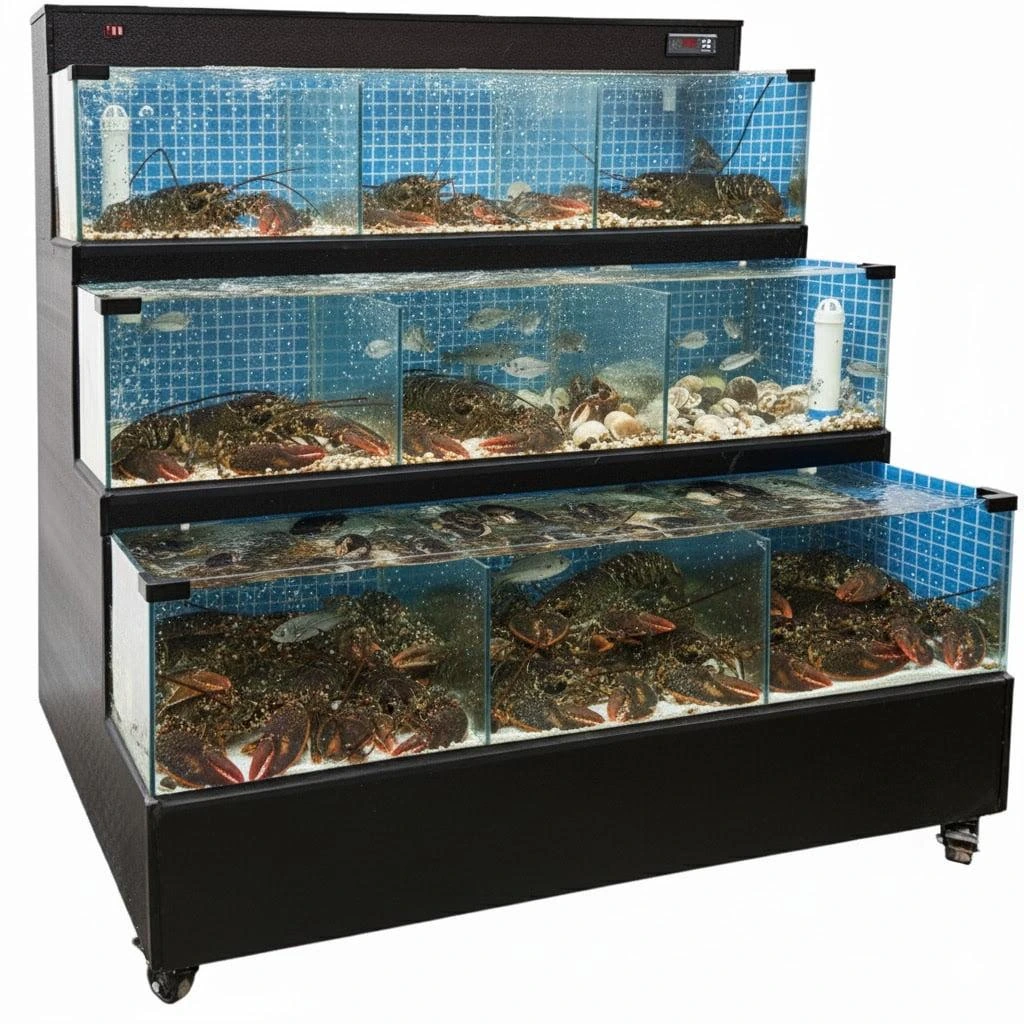
Live Seafood Tanks
Triple-layer live seafood tank configuration with a 2HP single cooling unit, dual circulation, dual filtration and separate oxygenation.
Live Seafood Tanks
Commercial lobster holding and display tank with a 1.5HP heat pump unit, independent circulation, filtration and oxygenation.
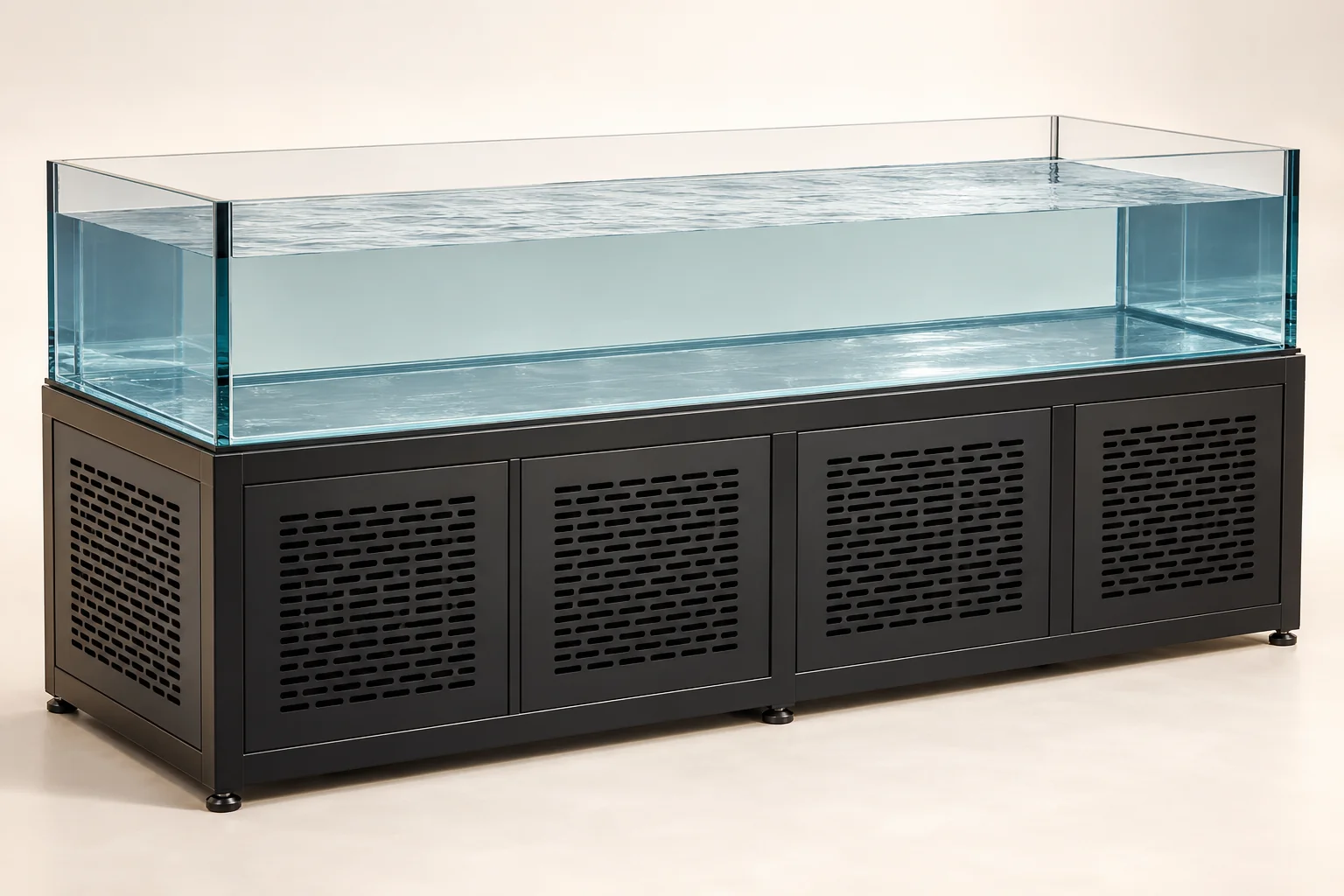
Live Seafood Tanks
Commercial king crab display tank with a 1.5HP single-cooling unit, independent circulation, filtration, oxygenation and ultra-clear glass.
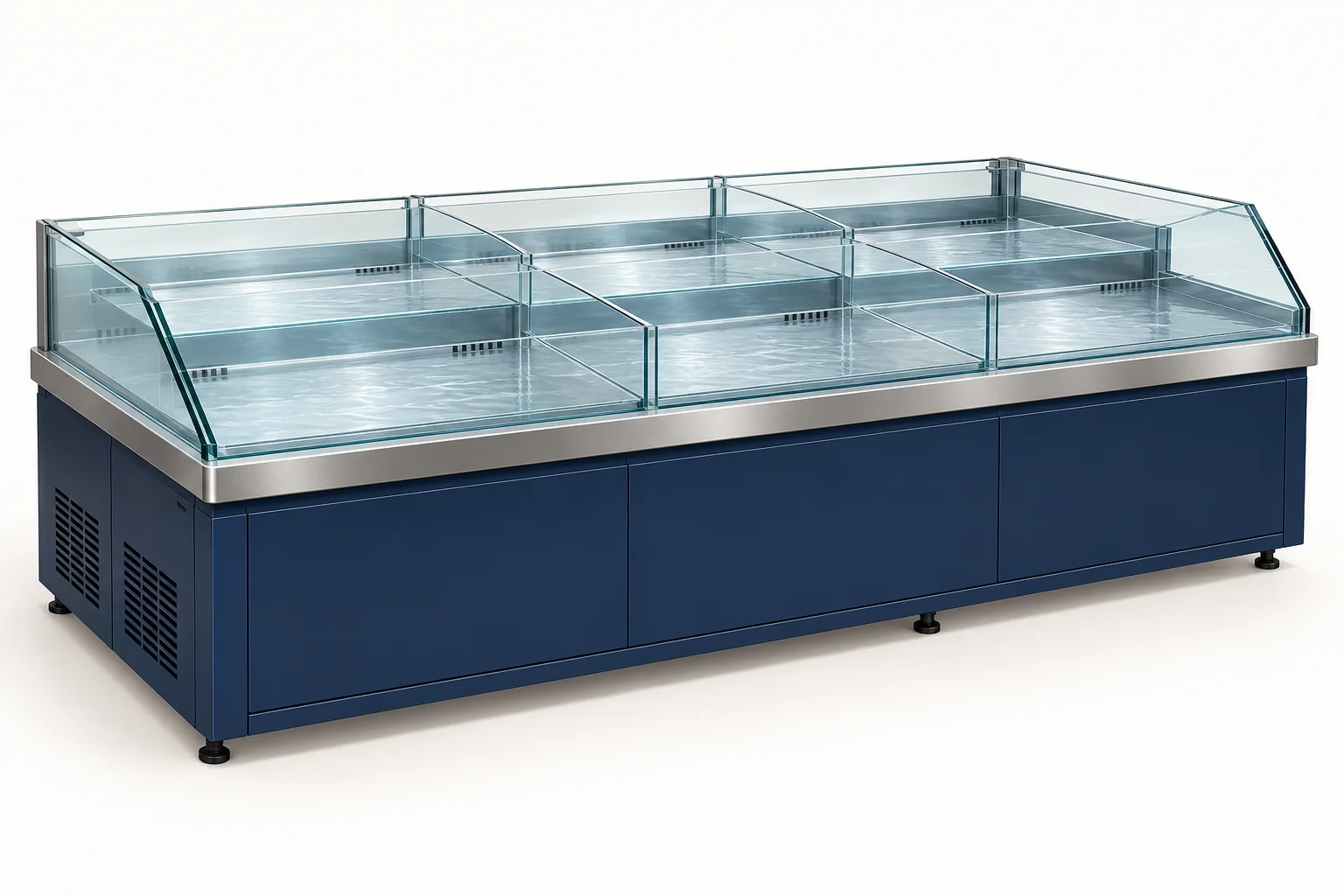
Live Seafood Tanks
Commercial shellfish tank for oysters and abalone with a 1.5HP heating and cooling unit, dual circulation, dual filtration and oxygenation.
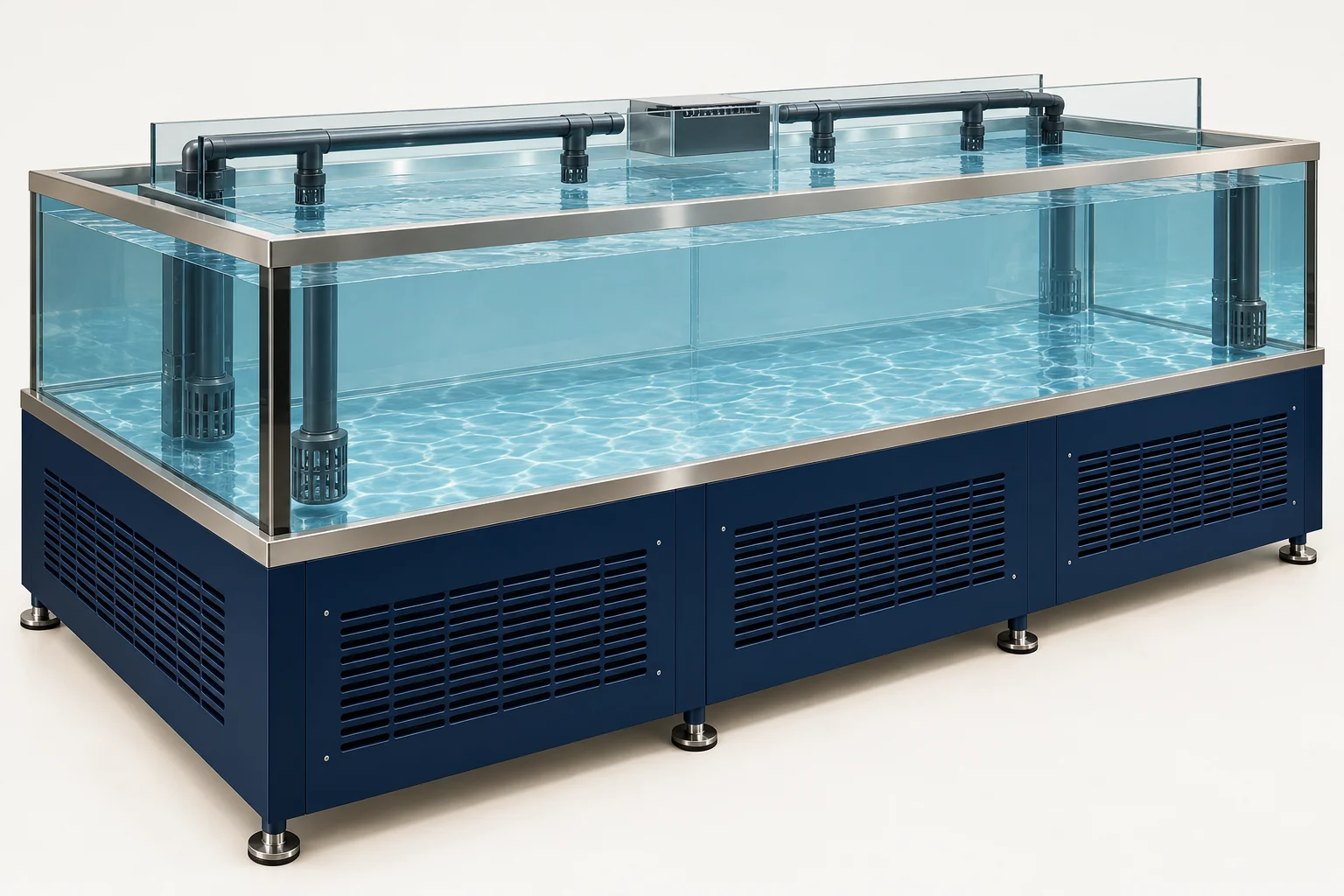
Live Seafood Tanks
Double-sided island seafood display tank with a 2HP heating and cooling unit, independent dual circulation, dual filtration and oxygenation.
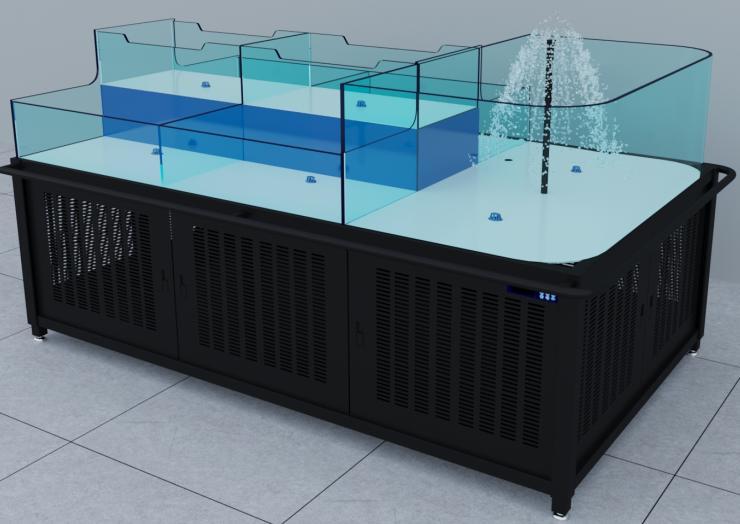
Live Seafood Tanks
U-shaped island live seafood tank system with a 2HP heating and cooling unit, dual circulation, dual filtration, dual cooling and oxygenation.
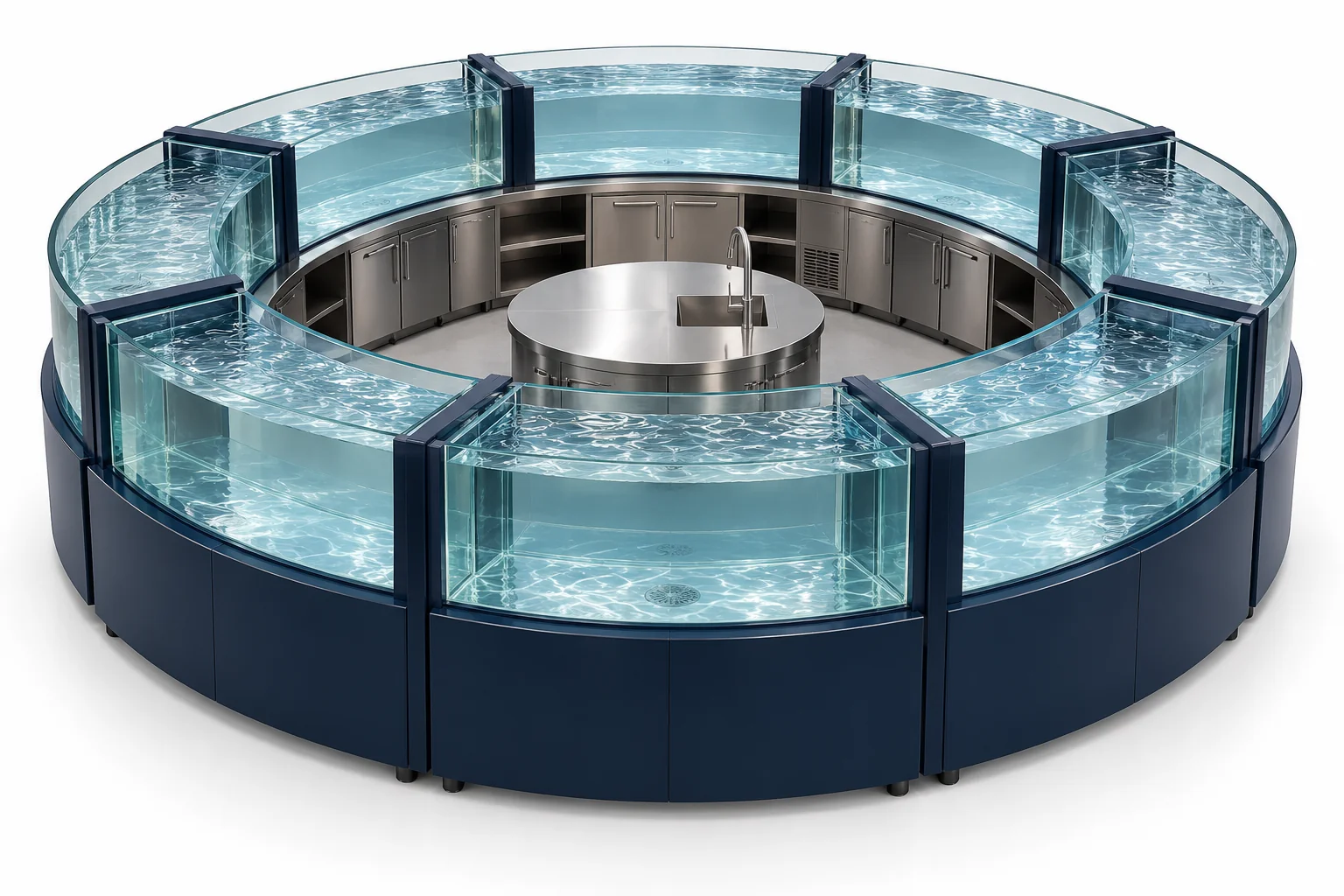
Live Seafood Tanks
Circular island live seafood display system with dual circulation, dual filtration, separate oxygenation and a customizable combination layout.
Live Seafood Tanks
A two-layer live holding arrangement for shrimp, crab and shellfish, with a documented heat-pump and independent water-system reference.
Plan live holding, iced presentation and refrigerated seafood displays around the species, store footprint and service workflow of your fish market or seafood retail store.
Coordinate selected fresh seafood displays, live tanks, upright refrigerators, deli counters and island freezers within the supermarket zones you need to equip.
Custom layouts according to restaurant floor plans, with live seafood display, back-of-house holding and selected refrigeration reviewed as separate project requirements.
Prepare mixed-product or project enquiries covering model selection, destination-market electrical configuration, OEM branding, packaging and required documentation.
Turn the species list, floor plan and water-system requirements into a tank specification that can be compared and approved.
Ask for system boundaries, service access and included components instead of assuming a tank photograph defines its water system.
Build a zone plan covering live holding, fresh display, replenishment, service access and utilities before choosing individual modules.
Prepare an itemized brief that distinguishes fixed site constraints, desired options and specifications requiring technical confirmation.
BUYER QUESTIONS
They can be considered for both settings. Provide the intended species, presentation needs, space and operating plan so the configuration and suitability can be reviewed.
Do not assume compatibility or shared-water suitability. Identify the species and request review of compartment and circuit separation with qualified system support.
Not necessarily. Confirm the actual water-circuit and filtration arrangement in the proposed specification.
No species-specific settings are prescribed here. Obtain professional guidance for the intended seafood and operating conditions, then review the equipment against those requirements.
Provide the floor plan, delivery access, utilities, drainage, electrical supply and maintenance space. Confirm site support requirements and responsibilities with the installation team.
These can be discussed as part of the project. Final dimensions and system layout require review of the holding application, site and proposed components.
BUYING THIS EQUIPMENT FAMILY
Lobster, fish, crustacean and shellfish project review. Compare the intended task and selected reference configuration before requesting the final project specification.
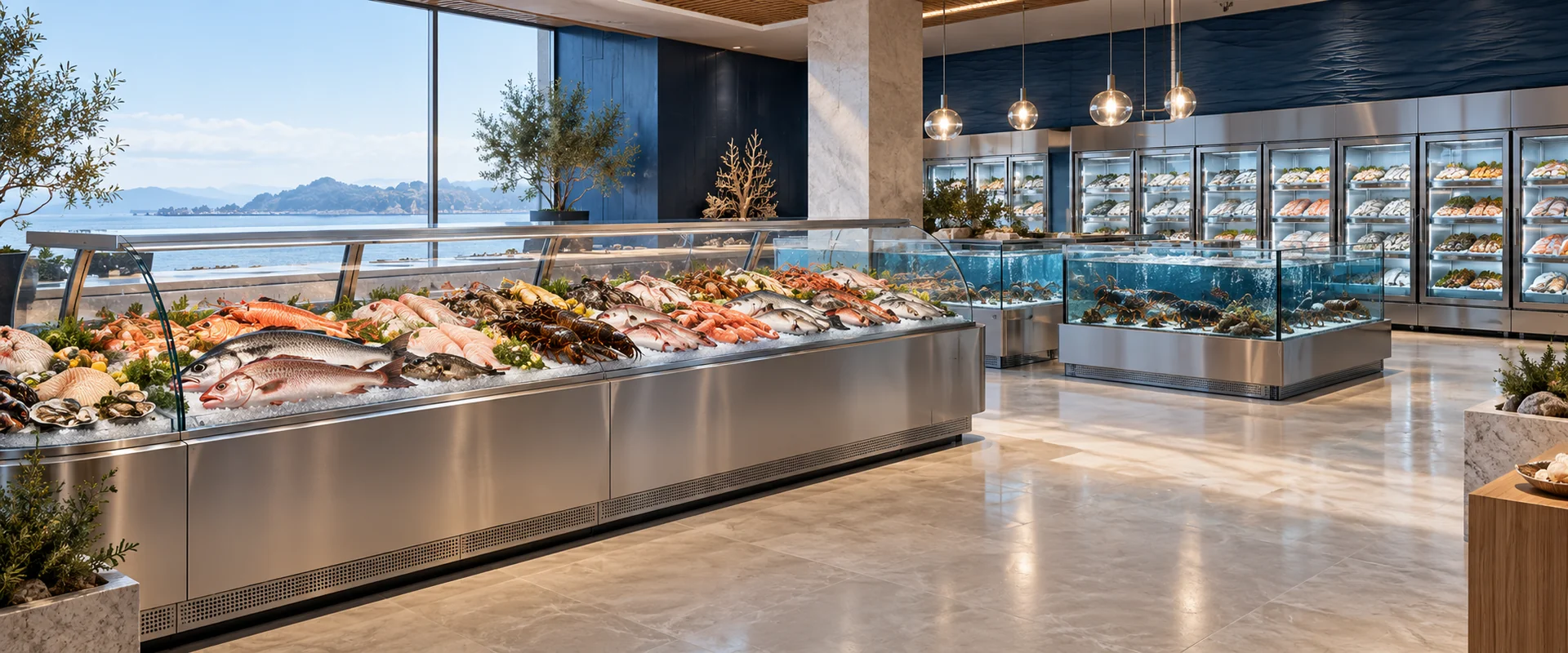 Design Reference
EQUIPMENT / APPLICATION / CONFIGURATION
Use the actual product references below for models and technical data. Describe your application, available space and required equipment schedule.
Prepare a purchasing brief ↗DESIGN REFERENCE · PLANNING DIAGRAM
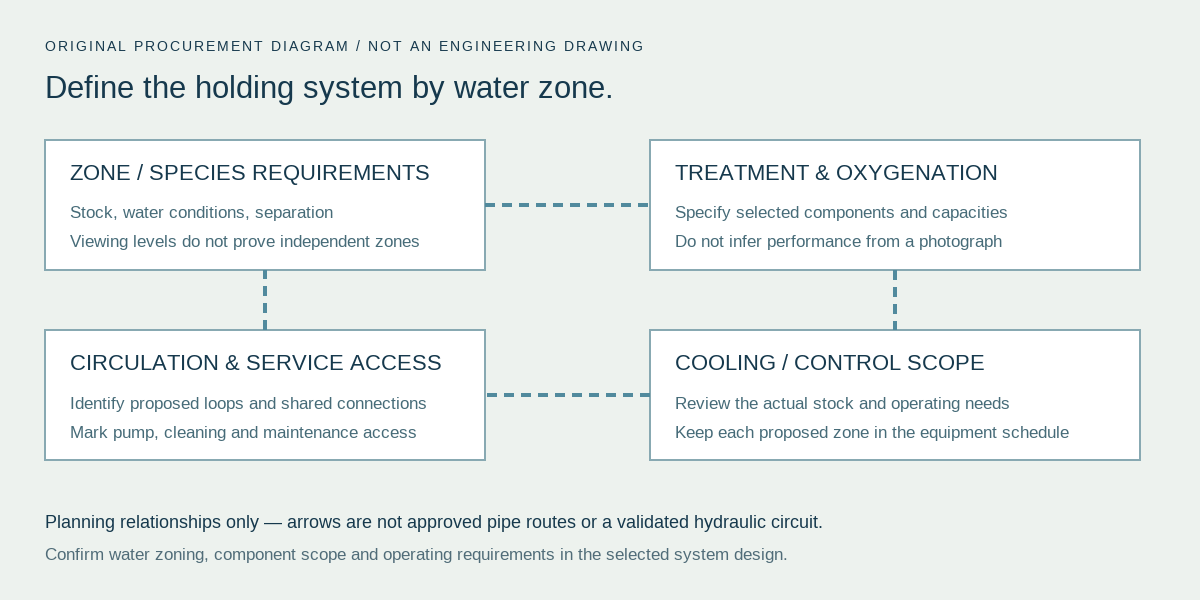
| Procurement task | What to compare |
|---|---|
| Stock requirements | Species, requested holding load and intended duration |
| Water zones | Shared or independent circulation, treatment and temperature review |
| Installation | Available footprint, structural review, water, drainage and service access |
Double-layer display configuration · Dual water circulation
Request this product configuration ↗Triple-layer display configuration · Dual water circulation
Request this product configuration ↗Independent water circulation · Filtration
Request this product configuration ↗FROM COMPARISON TO A QUOTATION
Start with lobster, fish, crustacean and shellfish project review. Keep the model, included components and site work visible in each offer.
Use the individual product references to choose a suitable format for lobster, fish, crustacean and shellfish project review.
List the selected model or layout, included components, requested accessories and work by others.
Add dimensions, quantity, destination country and the actual available utilities.
APPLICATION / SELECTION / PURCHASING BRIEF
A commercial seafood display system is not a domestic aquarium or a fish display on ice. Identify the intended stock before selecting the viewing arrangement.
| Review topic | What to include or request |
|---|---|
| Holding task | Identify species and intended operation without borrowing another species' settings. |
| Water circuits | Request a proposed circulation, treatment and temperature-control scope. |
| Site access | Review floor/support, service routes and maintenance responsibility. |
Selection guidance, not a new equipment rating, test record or statement that all options are supplied together. Use the published model references and the actual order specification.
Compare the same model or configuration, included components, usable space, utility requirements and order scope. Keep accessories and site work identified separately.
Send a rough layout and the actual operating requirements for review. Custom dimensions, structure or finish depend on the equipment and the final approved specification.
Factory configurations below are references from the Zhonghe custom product catalogue, PDF pages 8–9. Use them to start a specification. Confirm each species, stock load and water circuit for the actual project.
| Species | Water planning | Catalogue reference or review requirement |
|---|---|---|
| Lobster | Marine zone. Identify species and holding duration. | Lobster Ecological Tank |
| King crab | Marine zone. Confirm cooling and stock load. | King Crab Supermarket Tank |
| Shrimp | Freshwater or seawater by species. Confirm salinity and oxygen demand. | Double-Layer Shrimp & Crab Tank |
| Crab | Identify species and confirm whether separate compartments are required. | Double-Layer Shrimp & Crab Tank is a catalogue reference. |
| Oysters | Marine bivalves. Review a dedicated water zone and local handling requirements. | Abalone & Oyster Tank |
| Clams | Identify species and plan a separate bivalve review. | No clam-specific model confirmed. Request engineering review. |
| Live fish | Freshwater and seawater require separately specified zones. | Multi-Function Double-Layer Seafood Tank |
Do not infer independent circuits from visible partitions or multiple tiers. Draw each water zone and show its returns, treatment and fill/drain connections. Freshwater and seawater, and species with incompatible conditions, need separately reviewed circuits.
The BC Centre for Disease Control Guideline for Live Retail Fish Holding Systems is a British Columbia reference for system components, servicing and operating records. Its regional requirements and reference values are not universal specifications for Zhonghe equipment. Confirm destination requirements and final operating conditions with species-specific engineering review.
Read the filtration and circulation buyer guide or plan the service zones.
Request a live holding system quote ↗LET’S DEFINE YOUR PROJECT
Tell us the equipment type, dimensions, quantity and destination market. We can review standard catalog options or discuss a custom configuration for the project.