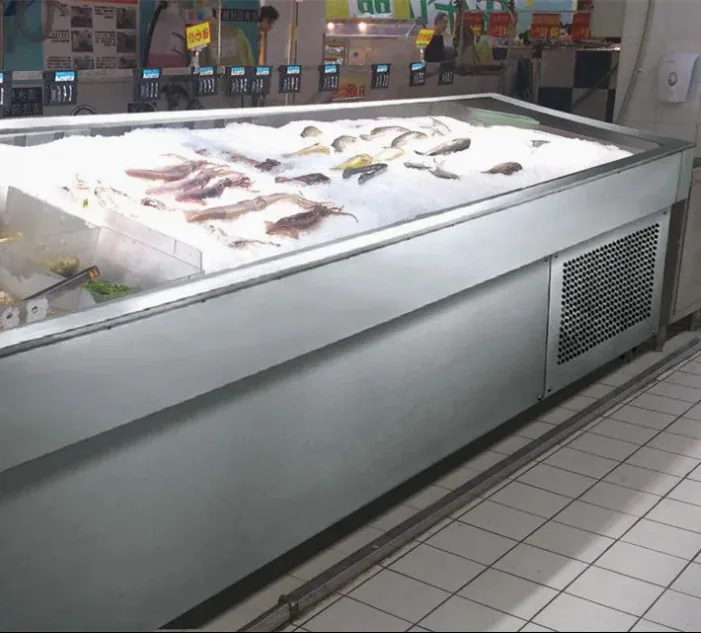
Seafood Display Cases
Commercial Seafood & Fresh Fish Display Case
Custom seafood and fresh-fish display counter for seafood markets, supermarkets and restaurants, with ice-bed presentation, drainage and configurable refrigeration.
View product →PROJECT PLANNING / PROCUREMENT
Plan live holding, iced presentation and refrigerated seafood displays around the species, store footprint and service workflow of your fish market or seafood retail store.
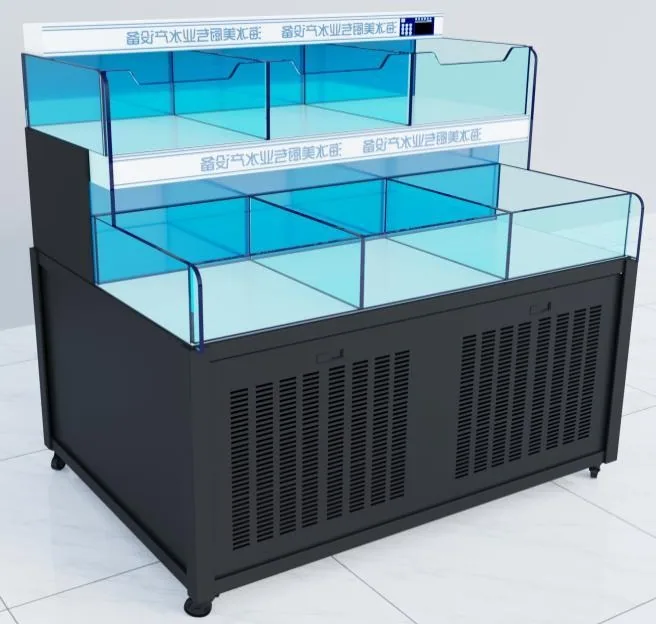
Catalog reference configuration; final model and layout confirmed per project.
Start with the selling format for each seafood category. A live tank is a water-system project; an ice table provides an iced display bed; a refrigerated display case has its own specified cooling and access arrangement. Map fish, lobster, crab and shellfish to their intended holding or selling method before selecting equipment. Neither a tank name nor an ice-table photograph establishes a universal operating temperature.
Identify freshwater and seawater requirements on the layout. The supplied multifunction tank references include dual circulation and filtration arrangements, while other tank references list independent systems. A dual-layer appearance does not, by itself, prove separate water circuits. Ask the proposal to show which compartments share water and which have independent circulation, filtration, oxygenation and cooling. Final water conditions and species compatibility are confirmed per project.
Review the king crab, lobster and abalone/oyster references against the intended stock rather than substituting one tank for another by appearance. Include shrimp and crab compartment requirements where relevant. Source configurations, such as a listed cooling-unit size or glass type, are reference configurations. Final size, glass, cooling capacity and water-system scope depend on the approved project drawing.
Draw the customer route, staff service side, replenishment access and service connections before fixing the equipment footprint. An island arrangement can combine live tanks and ice-display modules, but its external size is not the usable space of every module. A wall-side installation still needs room to access equipment and clean the display. Mark doors, columns, delivery access and maintenance clearances for review.
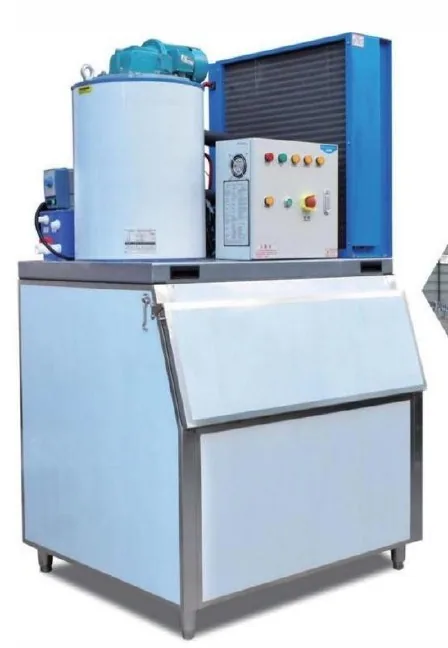
Place meltwater drainage, tank-system servicing and ice replenishment in the project brief. Ask how filters and pumps are accessed after installation, which items are included in the supply and which connections are provided by the site. A flake ice machine may support an ice-bed display; its selected output, storage and utilities must be reviewed against the actual operation. No ice-production or holding performance is inferred from a photograph.
Send one marked-up plan showing the live-holding area, fresh-fish counter and any supporting refrigeration. Request a module list and configuration summary so the quotation distinguishes tanks, ice tables, cases, ice equipment and site works. Product temperature, water conditions and cleaning requirements need project review; this planning page does not prescribe food-handling conditions or promise animal survival results.
Commercial refrigerated and ice-bed display solutions for fresh fish and seafood retail.
Commercial stainless steel ice display tables for seafood markets, supermarkets and fresh fish counters.
Custom live seafood display and holding tank systems for restaurants, seafood markets and commercial retail.
Flake and snowflake ice machines for seafood markets, supermarkets, hotels and foodservice applications.
Seafood Display Cases
Custom seafood and fresh-fish display counter for seafood markets, supermarkets and restaurants, with ice-bed presentation, drainage and configurable refrigeration.
View product →
Live Seafood Tanks
Commercial lobster holding and display tank with a 1.5HP heat pump unit, independent circulation, filtration and oxygenation.
Live Seafood Tanks
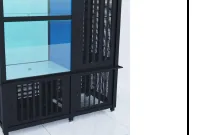
Commercial king crab display tank with a 1.5HP single-cooling unit, independent circulation, filtration, oxygenation and ultra-clear glass.
Live Seafood Tanks
Commercial shellfish tank for oysters and abalone with a 1.5HP heating and cooling unit, dual circulation, dual filtration and oxygenation.
Commercial Ice Machines
Commercial flake ice machine family for seafood markets, supermarkets and fresh-food applications, with multiple daily production capacities.
View product →Live Seafood Tanks
A two-layer live holding arrangement for shrimp, crab and shellfish, with a documented heat-pump and independent water-system reference.
View product →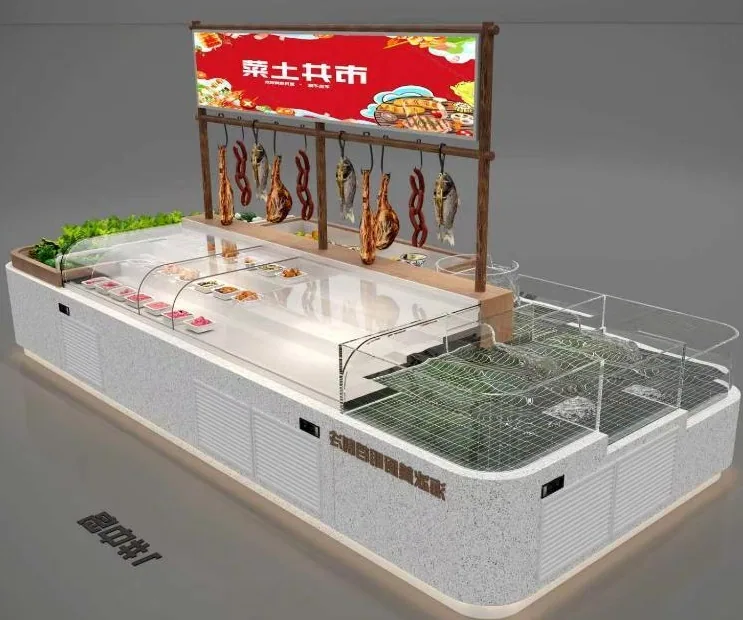
Seafood Ice Display Tables
An arc-shaped stepped ice display direction for coordinated seafood counters and island combinations.
View product →References help identify the equipment format; the approved project specification defines the final supplied configuration.
Turn the species list, floor plan and water-system requirements into a tank specification that can be compared and approved.
Ask for system boundaries, service access and included components instead of assuming a tank photograph defines its water system.
BUYER QUESTIONS
Send the combined floor plan and required module list. The supplied catalog includes island combination references; final module scope and interfaces are confirmed per project.
Identify the required zones first. The proposed circulation, filtration and cooling separation must be shown and approved; visual layers alone do not establish independent systems.
Provide the species or fresh-product requirement for review. No single temperature is assumed for every seafood category or tank.
No. Reference configuration data does not establish a universal holding time, survival rate or capacity for your stock.
Review the layout, technical configuration and specification before production. Packaging, delivery and documentation requirements are agreed for the project.
View the custom manufacturing process →LET’S DEFINE YOUR PROJECT
Tell us the equipment type, dimensions, quantity and destination market. We can review standard catalog options or discuss a custom configuration for the project.